NFL Over/Under Picks: Totals Analysis, Trends and Weather Factors
 Available in US
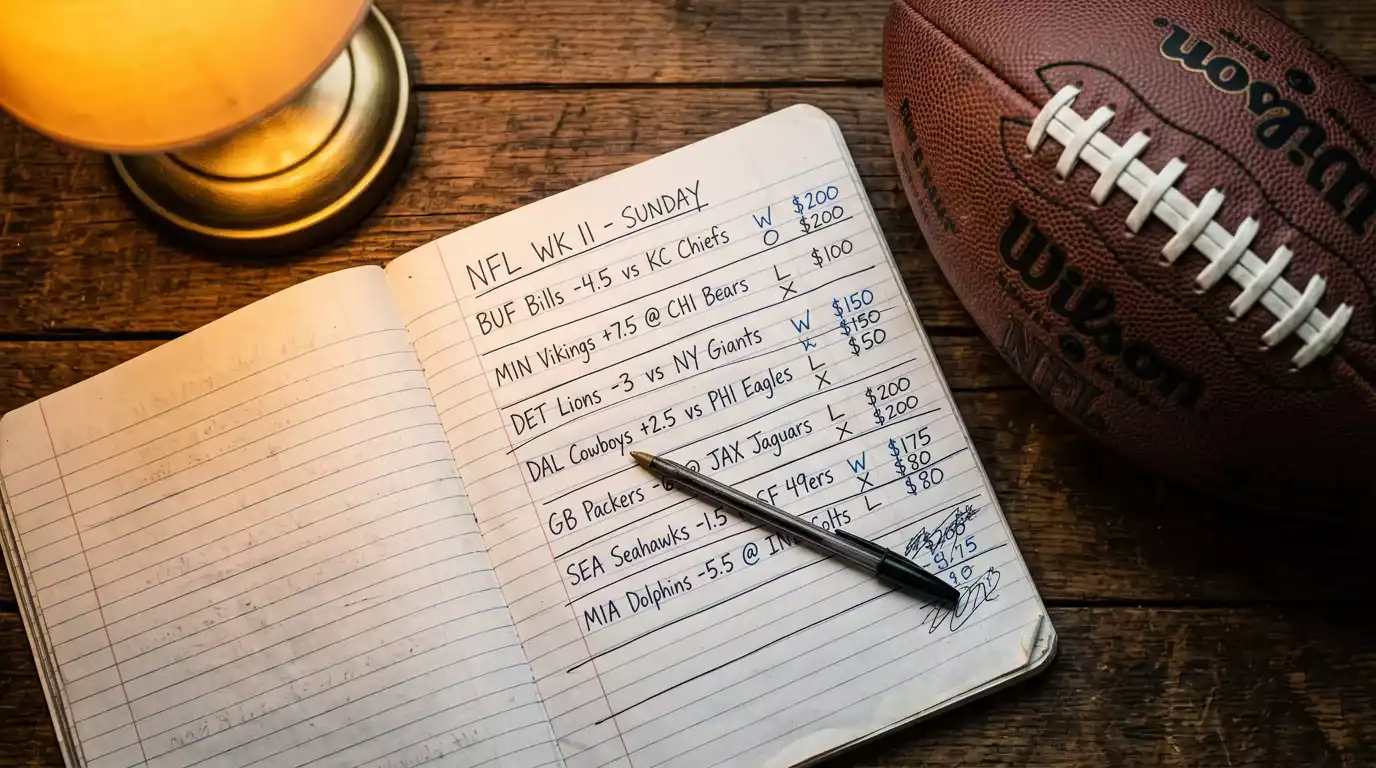
The most profitable NFL bet I placed in the 2024 season wasn’t a spread or a moneyline. It was an under on a Week 15 divisional matchup between two teams I’d been tracking since September. The total opened at 44.5, public money pushed it to 46, and I hammered the under at the inflated number. The game finished 17-13. That 30-point total wasn’t a fluke – it was predictable if you knew where to look. Divisional rematches late in the season trend under at roughly a 57% clip, a pattern that holds year after year according to Pickswise’s historical analysis.
Totals betting gets overshadowed by spreads and moneylines in most punters’ thinking. That’s a mistake. The over/under market rewards a different kind of analysis – one rooted in pace, efficiency, game environment and defensive scheme rather than who wins or loses. And for UK bettors who find the spread confusing or overly dependent on American football knowledge, totals offer an entry point that’s genuinely accessible.
How NFL Totals Are Set and Adjusted
Every Tuesday and Wednesday during the NFL season, I check the opening totals from the major market-makers. The number usually appears 48-72 hours before kickoff and reflects a combination of inputs: team scoring averages, defensive efficiency ratings, pace of play, venue, and early weather forecasts. What most bettors miss is that the opening total is not the bookmaker’s best guess at the final combined score – it’s the number designed to attract balanced action on both sides.
Once the line opens, it moves. Public money tends to push totals upward because casual bettors prefer overs – rooting for points feels more natural than rooting for a defensive slog. Sharp money often sits on the other side. When you see a total open at 45 and drop to 43.5 despite public sentiment favouring the over, professional bettors have loaded the under heavily enough to move the line. That divergence between public direction and line movement is one of the most reliable signals in totals betting.
The key numbers for totals differ from spreads. In spread betting, 3 and 7 dominate because of field goals and touchdowns. In totals, the key numbers are 41, 43, 44, 47, and 51 – combined scores land on these more frequently than adjacent numbers. Crossing one of these thresholds in either direction changes the probability landscape meaningfully. If a total sits at 43.5, moving to 44.5 isn’t just a one-point shift – it crosses a clustering zone where a disproportionate number of games land.
For UK punters, totals at most licensed bookmakers are displayed in decimal odds with the line clearly marked. The format is straightforward: over 44.5 at 1.91, under 44.5 at 1.91. That -110 equivalent on both sides is standard, though some bookmakers shade one direction slightly depending on their liability. Shopping between two or three UK-licensed sites for the best totals price is worth the 30 seconds it takes.
Pace, Efficiency and Scoring Metrics for Totals
Shaun Stack, a senior NFL analyst at Gambling Nerd, put it well when he described his approach: “I try to account for as many factors as possible, from usage rates and schemes to weather and a coach’s job security.” That philosophy applies perfectly to totals, where the variables stack in layers.
Pace sits at the foundation. NFL teams run between 55 and 75 plays per game. A matchup between two up-tempo offences might produce 150 combined plays; a matchup between two run-heavy, clock-grinding teams might barely reach 120. More plays mean more scoring opportunities, which pushes the expected total higher. I track plays per game as my first filter – it separates high-volume matchups from low-volume ones before I examine anything else.
Efficiency layers on top of pace. A team running 70 plays per game but converting only 28% of third downs will stall repeatedly, turning possessions into punts rather than points. Conversely, a team averaging 65 plays but converting 45% of third downs sustains drives and reaches the red zone consistently. The combination of pace and efficiency – not either metric alone – predicts scoring output.
Red-zone efficiency adds the final layer. Two teams might move the ball between the 20s at similar rates, but one converts 65% of red-zone trips into touchdowns while the other settles for field goals 40% of the time. That gap translates directly into points. Seven versus three on each trip compounds across a game – a team with four red-zone trips and a 65% touchdown rate scores roughly 22 points from those trips; the same four trips at a 40% touchdown rate produces about 16. Six points of difference from the same number of opportunities.
Where this gets actionable: when two teams with high pace and high efficiency meet, the total is usually already inflated. The value often sits in games where one metric points up and another points down. A fast-paced team with poor red-zone conversion meeting a slow team with elite scoring efficiency creates genuine uncertainty about the total – and uncertainty is where bookmaker pricing becomes softest.
Weather’s Impact on NFL Totals
Week 17 of the 2024 season gave us a clinic in weather-driven totals. Three outdoor games in the northern United States played through wind gusts exceeding 25 mph, and all three finished under the posted total. I’d backed the under in two of them. No sophisticated model was needed – just a weather check and an understanding of wind thresholds.
Wind is the single most impactful weather variable for NFL totals. At sustained speeds above 15 mph, passing accuracy degrades measurably. Above 20 mph, deep passing – anything beyond 20 yards downfield – becomes unreliable. Above 25 mph, even intermediate routes suffer, and kicking accuracy drops sharply. Field goals that would be routine in calm conditions become coin flips. The practical effect: games played in high wind produce 3-5 fewer points on average than the posted total suggests.
Rain matters less than most people assume, provided it isn’t torrential. Light to moderate rain affects grip on the ball and footing but doesn’t fundamentally suppress scoring the way wind does. Heavy rain combined with wind, though, creates conditions where turnovers spike and sustained drives collapse. Those games go under at an elevated rate – somewhere around 58-60% historically in games with significant precipitation and wind combined.
Snow is the wildcard. Contrary to popular belief, light snow games don’t reliably go under. Footing is affected but passing lanes remain visible, and the novelty factor sometimes produces erratic, high-scoring affairs. Heavy snow – accumulation during the game – is different. Visibility drops, the running game dominates by necessity, and clock management becomes the primary strategy. Those games trend under significantly.
Cold alone, without wind or precipitation, has a minimal effect on totals. Players are conditioned for it, heated benches and sideline gear mitigate the worst of it, and dome-temperature offences adapt within a quarter or two. The exception is dome teams travelling to outdoor cold-weather venues for the first time in weeks – that adjustment period can suppress first-half scoring, particularly for teams that rely on precise timing routes.
My practical workflow for weather-adjusted totals is straightforward. I check forecasts no earlier than Thursday afternoon for Sunday games, focusing on wind speed at kick-off and the probability of precipitation during the game window. If wind exceeds 15 mph sustained, I look at the under. If it exceeds 20 mph, the under becomes a primary target. Everything else – light rain, moderate cold – I treat as noise unless combined with wind.
Why Totals Deserve a Permanent Slot in Your Betting Week
Point spread betting dominates the NFL conversation, and for good reason – it’s the sharpest, most liquid market. But that sharpness cuts both ways. Finding edge on a spread requires beating a line that the best analysts in the world have helped set. Totals, by contrast, receive less sharp attention and are more sensitive to environmental variables that casual bettors ignore. Weather, pace mismatches, coaching tendencies in specific game contexts – these factors move the probability needle on totals more than most punters appreciate.
The Optimove NFL Wagering Intentions Report from 2025 found that only 47% of bettors regularly wager on over/unders, compared to 61% on spreads. That participation gap means the totals market absorbs less informed money, which in turn means pricing inefficiencies persist longer. For a bettor willing to study pace data, red-zone efficiency, and weather patterns, totals offer a quieter, less contested battlefield.
I allocate roughly 30% of my weekly NFL action to totals, and in some weeks – particularly late in the season when weather becomes a factor and divisional matchups dominate the slate – that figure rises to 40-50%. It’s not a secondary market for me. It’s a core part of the portfolio, and it has been the most consistent source of positive expected value across my last four seasons of tracking.
How does weather affect NFL over/under totals?
Wind is the most significant weather factor. Sustained wind above 15 mph degrades passing accuracy, and above 20 mph it suppresses deep passing and kicking. Games played in high wind historically finish 3-5 points below the posted total. Rain alone has a moderate effect unless combined with wind, which increases turnovers and drive stalls. Cold temperatures without wind have minimal impact on scoring.
What is the most profitable totals trend in NFL?
Divisional rematches late in the season – from roughly Week 13 onward – trend under at approximately 57% according to historical analysis. Familiarity between coaching staffs, tighter defensive game plans, and colder weather in outdoor venues combine to suppress scoring. This trend is strongest in divisions with outdoor stadiums in northern climates.
At what wind speed do NFL totals become unreliable?
At sustained speeds above 15 mph, passing efficiency drops measurably and the under becomes statistically favoured. Above 20 mph, deep passing and field goal accuracy deteriorate significantly. Above 25 mph, even intermediate passing routes are affected. Most experienced totals bettors treat 15 mph as the threshold for adjusting their analysis and 20 mph as the trigger for actively targeting unders.
Prepared by the nfl bet of the day editorial staff.