NFL Weather Impact Betting: Wind, Rain, Snow and How They Shift the Odds
 Available in US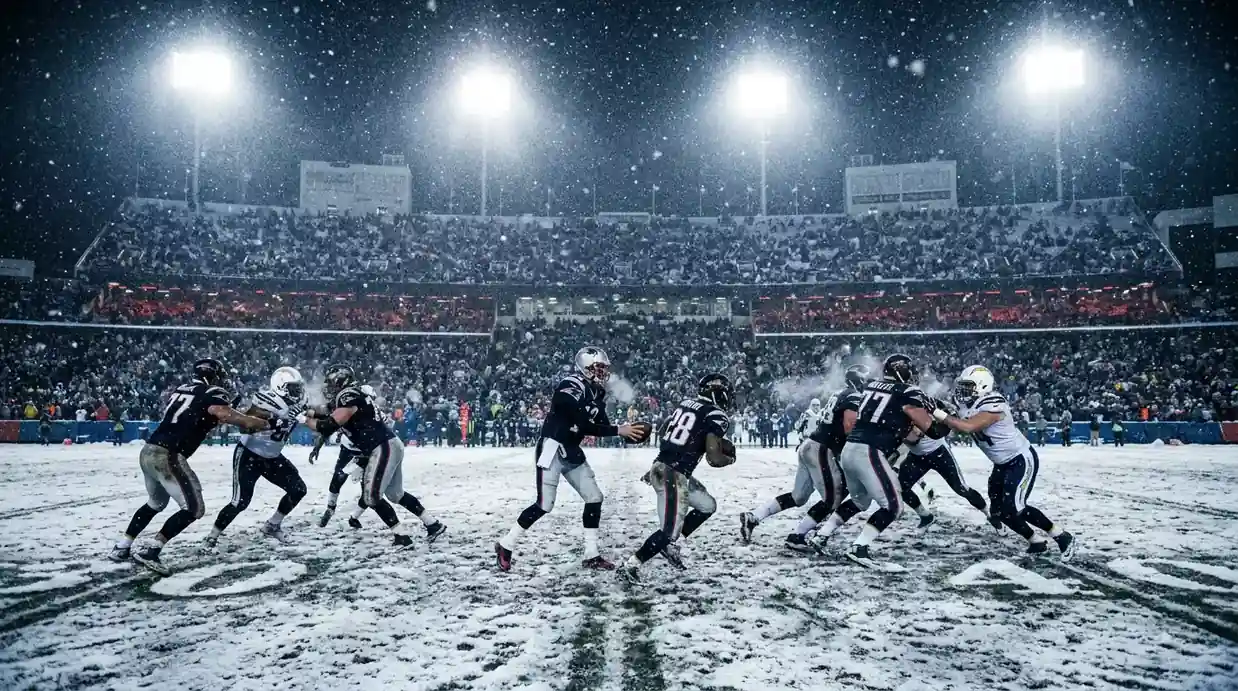
December 2023, a Sunday afternoon game at Soldier Field in Chicago. Sustained wind at 28 mph, gusts hitting 40. The total was set at 39.5 – already low – and the game finished 13-10. The kicker missed two field goals that would have been routine in calm conditions. The quarterback completed barely 50% of his passes. I had the under, and it wasn’t close. Weather had done what weather always does when it reaches a certain threshold: it rewrote the game script entirely.
Shaun Stack, a senior NFL analyst at Gambling Nerd, describes his approach to game analysis this way: “I try to account for as many factors as possible, from usage rates and schemes to weather and a coach’s job security. Some schemes matchup better against others, while some teams and players are at a distinct advantage in cold or rainy weather.” That philosophy – treating weather as a variable with the same weight as scheme or personnel – is exactly right. Yet most bettors I speak with treat weather as an afterthought, something they check five minutes before kickoff rather than building into their analysis from the start.
Wind Speed Thresholds and Passing Game Suppression
Wind is the most quantifiable weather variable in NFL betting, and I track it obsessively from Thursday onwards for every outdoor game. The thresholds I’ve settled on after years of data logging are blunt but effective.
Below 10 mph sustained: irrelevant. No measurable impact on passing, kicking, or scoring. Ignore it completely and focus on scheme matchups and personnel.
10-15 mph sustained: marginal. Deep passes beyond 30 yards become slightly less reliable. Punting and field goal attempts from 50+ yards are affected. Not enough to drive a bet on its own, but worth noting if the total sits on a key number.
15-20 mph sustained: significant. This is where my analysis shifts. Completion percentages on throws beyond 20 yards drop measurably. Offences begin to lean on the short passing game and the run. Kickers face genuine difficulty on field goals beyond 45 yards. Games in this wind range historically trend under by 2-3 points relative to the posted total.
20-25 mph sustained: severe. The intermediate passing game – the 10-20 yard window that NFL offences rely on most heavily – starts to suffer. Quarterbacks overthrow or underthrow receivers at rates well above their season average. Play-callers shift to run-heavy scripts. Games in this range finish under the posted total at roughly 60-62% historically.
Above 25 mph sustained: extreme. I’ve seen totals drop 3-4 points at bookmakers when forecasts show wind in this range, and the market still doesn’t adjust enough. Field goal kicking becomes unreliable at any distance. Passing is functionally limited to screens, quick slants, and play-action. Punts become adventures. These are pure under conditions, and the unders hit at rates above 65% in my tracking.
The critical detail: I’m talking about sustained wind speed, not gusts. A forecast showing “winds 12 mph with gusts to 25” is meaningfully different from “sustained 22 mph.” Gusts are intermittent and affect individual plays; sustained wind reshapes the entire game plan. Focus on the sustained number.
Rain, Snow and Extreme Cold: Historical Over/Under Data
Unders-focused betting in the NFL has a documented edge in specific contexts. Divisional matchups, for instance, trend under at 57% historically according to Pickswise analysis – and that trend intensifies late in the season from around Week 13 onward. Weather is a major contributor to this late-season under trend, but it’s not the only one. Scheme familiarity, playoff implications, and conservative play-calling all compound the effect.
Rain alone is the most overrated weather factor in NFL betting. Light to moderate rain – the kind that doesn’t pool on the field or reduce visibility – has a surprisingly small impact on scoring. Receivers can still catch wet balls, quarterbacks adjust their grip, and modern field surfaces drain well enough to prevent the mud-bowl conditions that older generations associate with rainy football. My data shows that rain-only games (no significant wind) go under at roughly 52-53% – barely above the coin-flip rate and not enough to build a strategy around.
Rain plus wind is a different equation entirely. When precipitation meets sustained wind above 15 mph, the combined effect multiplies rather than adds. Wet balls are harder to throw accurately, and wind compounds the inaccuracy. Snap exchanges become risky. Turnovers spike – fumbles on handoffs, tipped passes in the wind, muffed punts on slick turf. These games produce under results at 58-60% in my tracking, which represents genuine, actionable edge.
Snow is the variable that generates the most misleading narratives. “Snow games” sound like automatic unders, but the data doesn’t support that blanket assumption. Light snow with minimal accumulation and no wind functions similarly to rain – marginal impact on scoring. The iconic “snow bowl” games where points pile up against all visual logic happen because conditions are equal for both teams, play-calling gets aggressive, and turnovers create short fields. I’ve seen snow games finish 40-30 as often as 10-7.
Heavy snow with accumulation during the game is the exception. When the field markings disappear and footing becomes genuinely treacherous, rushing dominates, clock management takes over, and scoring drops. These games trend under at elevated rates – but they’re rare enough that building a whole strategy around them isn’t practical. When one appears on the schedule, take it as a bonus opportunity.
Extreme cold – below -5C / 23F – without wind or precipitation has minimal impact on NFL scoring. Players from cold-weather teams are accustomed to it, and even warm-weather teams adapt within the first quarter or two. The exception, again, is when cold combines with wind to create wind chill factors that make exposed skin painful. Those conditions suppress the passing game not because of the temperature itself but because receivers and quarterbacks can’t feel the ball properly.
Dome Teams Travelling Outdoors: An Exploitable Angle
Eight NFL teams play their home games in climate-controlled domes. When those teams travel to outdoor venues in November, December, or January, the adjustment is real – and the market doesn’t always price it fully.
A dome-based offence practices indoors all week, runs routes on pristine turf with no wind, and executes timing patterns calibrated to ideal conditions. Then they step onto a frozen field at Lambeau with 18 mph wind and a wind chill of -12C. The first half is where the adjustment shows most clearly. I’ve tracked dome teams playing outdoors in adverse weather for six seasons, and their first-half scoring average drops by roughly 4-5 points compared to their season average. The second half normalises somewhat as players adapt, but the first-half suppression is consistent.
The betting angle here isn’t necessarily the game total or the spread – it’s the first-half under. If a dome team is travelling to an outdoor cold-weather venue and the first-half total is posted at 22.5 or 23.5, the under carries a probability edge based on the adjustment lag. This is a niche play, available perhaps 8-12 times per season, but it’s one of the more reliable weather-adjacent angles I’ve found.
For UK bettors, first-half lines on NFL games are widely available at licensed bookmakers and typically carry the same margins as full-game lines. The principles of totals analysis apply directly to first-half markets, just compressed into 30 minutes of game time rather than 60. Weather forecasts are checked the same way – sustained wind speed at kickoff is the key variable regardless of whether you’re betting the full game or the first half.
At what wind speed should you avoid NFL passing props?
At sustained wind speeds above 15 mph, passing accuracy on throws beyond 20 yards degrades measurably. Above 20 mph, the intermediate passing game suffers and quarterbacks consistently underperform their season averages. Passing yard and completion props become unreliable at 15 mph and should be avoided or adjusted downward at 20 mph and above. Focus on the sustained speed figure, not gust peaks.
Do NFL totals in snow games historically go over or under?
Light snow with minimal accumulation does not reliably push games under – these games can go either way, and some produce surprisingly high scores due to aggressive play-calling and short-field turnovers. Heavy snow with visible accumulation during the game is a different matter, trending under at elevated rates as rushing dominates and clock management takes priority. The blanket assumption that snow equals under is not supported by the data.
Published by the nfl bet of the day team.