NFL London Game Betting: Jet Lag, Kickoff Times and Unique Edges for UK Punters
 Available in US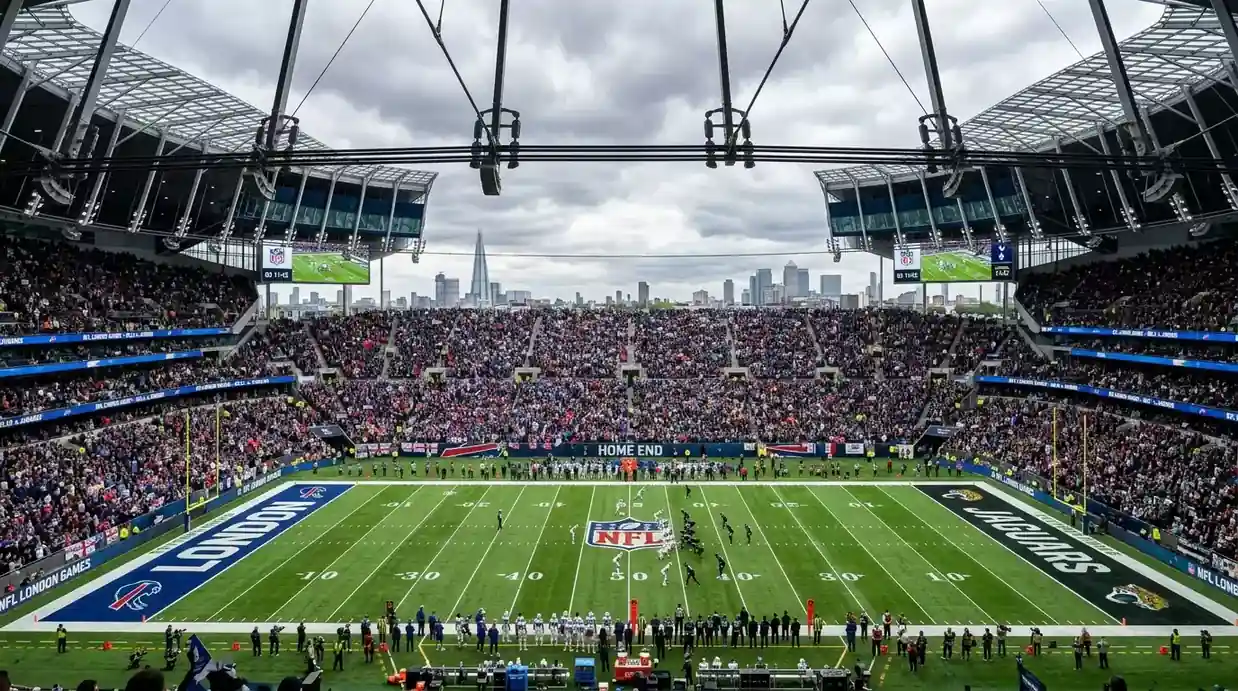
The UK is home to approximately 14.3 million NFL fans, with around 4 million classified as “avid” followers of the sport, according to NFL official research cited by OLBG. That’s not a niche audience – it’s a fanbase larger than the population of several NFL cities combined. And the centrepiece of that UK fanbase’s calendar is the London game series, where NFL teams cross the Atlantic and play on British soil in front of crowds that create an atmosphere US-based teams rarely encounter.
I’ve attended three London NFL games and bet on every single one staged since 2017. The betting angles for these games are genuinely unique – they don’t behave like normal NFL matchups, and applying standard handicapping without accounting for the London-specific variables is a mistake I see repeated every season.
Travel Schedules, Jet Lag and On-Field Performance
In 2025, the NFL staged a record seven international regular-season games, including three in London, with Wembley filling to roughly 85,000 spectators. Each of those games required both participating teams to fly across the Atlantic – a 7-10 hour journey depending on the departing city – and adjust to a five-to-eight-hour time zone shift. That adjustment isn’t cosmetic. It affects sleep cycles, reaction times, and cognitive function in ways that are measurable and relevant to on-field performance.
Most NFL teams travelling to London arrive on Thursday or Friday for a Sunday kickoff. That gives them roughly 48-72 hours to adjust. Sports science research suggests that full circadian adjustment takes approximately one day per hour of time zone change – meaning a team from the US West Coast (eight hours behind London) would need a full week to fully adjust. They get two or three days. The mismatch between required adjustment time and actual available time is the core of the London game edge.
How does this manifest in betting-relevant ways? First-half performance is the clearest indicator. In my tracking of London games, the team that travelled the greater distance (typically the “away” team, though both teams are technically away from home) has underperformed their first-half scoring average by 2-3 points. Sluggish starts, early turnovers, and conservative play-calling in the opening quarter reflect jet lag’s grip before the adrenaline of game action overrides it.
The “home” team designation in London games is essentially cosmetic. Neither team has a genuine home-field advantage. No team has a crowd loyalty edge – London fans support the spectacle, not a specific franchise. The designation determines uniform choice, sideline selection, and which team’s logo appears on marketing materials. For betting purposes, I treat both teams as neutral-site participants and focus entirely on travel distance, arrival date, and which team’s body clock faces the bigger adjustment.
Teams that build their schedule around the London game – arriving early, practising at local facilities, treating the trip as a mini training camp – perform measurably better than teams that fly in Thursday night and treat it as a standard road trip. The Jacksonville Jaguars, who played annually in London for years, developed a systematic approach that other franchises have slowly adopted. When evaluating a London game, I check whether either team has scheduled early arrival or additional preparation time – that information is usually available through team beat reporters by Wednesday of game week.
Kickoff Times and the UK Viewing Schedule
A spokesperson for Smart Betting Guide captured the growth well: “This data reveals a remarkable surge in British enthusiasm for American football. Cities such as Croydon, Newcastle, and Manchester are showing disproportionate search activity levels, signaling curiosity and a growing, digitally engaged fan culture.” That enthusiasm peaks when NFL games kick off at times that suit the UK schedule – and the London games deliver exactly that.
London NFL games typically kick off at 2:30 PM or 6:00 PM local time, placing them squarely in the UK afternoon and early evening. Compare that to standard NFL Sunday games that kick off at 6:00 PM UK time (1:00 PM ET), the late afternoon window at 9:25 PM UK time, and the Sunday night game at 1:20 AM Monday morning. London games are the only NFL action that UK bettors can follow live at a civilised hour without rearranging their entire day.
This timing matters for live betting. The 2:30 PM kickoff aligns with peak UK mobile betting activity. UK punters can follow the game in real time, react to in-play developments, and place live bets without staying up past midnight. The 68% of UK NFL fans aged 18-44, per the NFL International Fan Tracker via SPORTFIVE, are exactly the demographic most likely to engage with live betting on their phones during a Sunday afternoon.
For pre-game bettors, the London schedule creates a unique information advantage. Because London games kick off earlier than the main US slate, results from London feed into the broader NFL conversation before the afternoon games begin. If you’ve placed a spread or total bet on a London game, you’ll know the result before most US games have even started – potentially informing your approach to later kickoffs.
Historical ATS and Totals Results in London Games
The sample size for London NFL games is smaller than for domestic matchups – roughly 30+ games over the history of the series – which limits the statistical confidence of any single trend. That caveat matters. But within that sample, two patterns have held up consistently enough to inform my betting approach.
First, London games have trended under the posted total more often than over. The jet lag effect, conservative first-half play-calling, and the unfamiliar game-day routine contribute to slightly depressed scoring. The total market for London games has historically been set within the range of the participating teams’ normal numbers, without a systematic downward adjustment for the international context. Bookmakers are getting better at pricing this in, but the adjustment still feels incomplete in most seasons.
Second, the designated “home” team has not shown a meaningful ATS advantage. This aligns with the earlier point about the home designation being cosmetic. The spread in London games should be evaluated as a neutral-site matchup with adjustments for travel distance and preparation – not as a standard home-away split where the home team gets a 2-3 point advantage built into the line.
When I spot a London game where the bookmaker appears to have baked in a standard home-field advantage for the designated home team, I treat that as an overpricing of the favourite. A team listed at -3.5 in a London game, where the “home” designation provides no actual edge, is closer to a -1.5 or -2 team on a neutral field. That 1.5-2 point gap is exploitable, particularly when combined with travel and weather considerations at outdoor London venues like Tottenham Hotspur Stadium.
Tickets for NFL games at Tottenham in 2019 were oversubscribed 12 times over, with roughly 750,000 unsuccessful purchase attempts and sellouts within 45 minutes, per NFL official data. That demand hasn’t faded. London games are premium events for UK fans and represent the single best opportunity for UK-based bettors to apply their local knowledge – weather awareness, understanding of the venue, and familiarity with the fan atmosphere – to an NFL betting market that the rest of the world approaches from a distance.
How do NFL London games affect betting lines?
London games should be treated as neutral-site matchups rather than standard home-away games. The designated home team receives no genuine home-field advantage from the London crowd. Travel distance and jet lag are the primary factors – teams travelling from the US West Coast face a larger circadian adjustment than East Coast teams. Bookmakers occasionally bake in a standard 2-3 point home-field advantage that doesn’t apply in London, creating potential value on the designated away team.
Do home-designated teams in London actually have an advantage?
The home designation in NFL London games is largely cosmetic, determining uniform selection and sideline choice but conferring no crowd loyalty or venue familiarity advantage. Historical ATS data shows no meaningful edge for the designated home team. Bettors should evaluate London games as neutral-site contests and focus on travel schedules, preparation time, and jet lag differential rather than the home-away label.
What has been the ATS record in NFL London games?
Over 30+ London games, the sample shows a mild lean toward unders on the total, driven by jet lag, conservative early play-calling, and disrupted game-day routines. On the spread, neither the home-designated nor the away-designated team has shown a consistent ATS advantage, reinforcing the neutral-site assessment. The small sample size means these trends should inform rather than dictate betting decisions.
Prepared by the nfl bet of the day editorial staff.