NFL Moneyline Picks: When Backing Outright Winners Beats the Spread
 Available in US
Three seasons ago, I nearly ignored a Week 14 moneyline that stared me in the face. The spread on a particular road underdog sat at +7.5, priced at -110 on both sides. Standard enough. But the moneyline on that same underdog was +260 – and everything I’d tracked that week pointed to a genuine upset, not merely a back-door cover. I took the moneyline at +260 instead of the spread. The underdog won outright by six. The spread would have paid even money; the moneyline returned more than two and a half times my stake. That single decision crystallised something I’d been circling for years: the moneyline is an underrated market, and most bettors default to the spread without asking whether it’s actually the better vehicle for their read on a game.
Point spread betting accounts for around 61% of NFL wagering activity, per the Optimove NFL Wagering Intentions Report from 2025. The moneyline sits a step behind at 52%. Yet the two markets answer fundamentally different questions – and the gap between them creates opportunities that pure spread bettors miss entirely. This guide breaks down when the moneyline offers genuine edge over the spread, how to identify underdog moneyline value, and how moneylines slot into accumulator strategies for UK punters.
Moneyline vs Spread: When Each Market Has the Edge
I keep a spreadsheet – nine seasons of data now – where I log every game I seriously considered and which market I chose. The pattern that jumps out is simple: spreads reward you for being approximately right, moneylines reward you for being decisively right. That distinction matters more than most people realise.
A spread bet on a -3 favourite asks whether they’ll win by more than a field goal. A moneyline bet on the same favourite asks only whether they’ll win at all. You’re paying a premium for that reduced requirement – a -3 favourite might be priced at -110 on the spread but -160 on the moneyline. The question becomes: is the extra certainty worth the reduced payout?
For favourites, the answer is usually no. When a team is favoured by three or fewer points, the moneyline price is often reasonable – perhaps -150 to -170. You’re sacrificing some return for a wider margin of victory that still pays. But once the spread reaches -7 or beyond, the moneyline on the favourite balloons to -300, -350, even -450. At those prices, you’re locking up capital for minimal return, and a single upset wrecks your week.
The real moneyline edge lives on the other side of the ledger: underdogs. A team getting +7 on the spread at -110 might sit at +280 on the moneyline. If your analysis points to a genuine upset – not just a competitive loss – the moneyline pays dramatically better. The spread in that scenario is the consolation prize; the moneyline is the conviction play.
Here’s my working rule after years of tracking: if your projected margin of victory for the underdog is positive – you genuinely expect them to win, not just cover – the moneyline almost always offers superior expected value to the spread. If you expect the underdog to lose by a small margin but cover the number, the spread is your market. The distinction is about the shape of your prediction, not just its direction.
One nuance UK bettors should note: decimal odds make this comparison easier than American odds. A moneyline of +260 translates to 3.60 in decimal – meaning you need the underdog to win roughly 28% of the time for the bet to break even. NFL spread analysis uses different break-even thresholds entirely, which is why switching between the two markets requires a genuine shift in thinking, not just a preference.
Finding Value on Underdog Moneylines
My most profitable NFL season came in 2022, and it wasn’t because I picked more winners – my overall win rate was mediocre at 54%. It was because I loaded underdog moneylines when the price was wrong. Two wins at +250 and +300 covered a string of spread losses that would have sunk a flat-staking approach. That asymmetry is what makes underdog moneylines so compelling.
The first thing to understand: bookmakers set moneyline prices by converting the spread into an implied probability, then applying their margin. But that conversion isn’t perfectly efficient. Spreads attract the bulk of the handle, so the lines are sharpest there. Moneylines, especially on bigger underdogs, receive less action and sometimes carry slightly softer prices. The inefficiency is small – we’re talking about 1-3% implied probability in many cases – but over a season of 50-60 bets, that edge compounds.
Americans wagered over $30 billion on the 2025 NFL season through legal sportsbooks, an 8.5% increase year-on-year according to the American Gaming Association. That volume concentrates heavily on spreads and popular parlays. Moneyline underdogs, particularly in less glamorous matchups, receive a thinner slice of the handle – and thinner handle means slightly less efficient pricing.
Where do I look for underdog moneyline value specifically? Three situations stand out from my tracking:
Divisional games where the underdog knows the opponent’s scheme intimately. The second meeting of the season is particularly fertile ground – coaching staffs have had months to study tendencies, and the underdog’s game plan is often tighter than the market expects. These games produce outright upsets at a rate that exceeds what the moneyline implies.
Short-rest games where the favourite played the previous Monday night and now faces a Sunday opponent that had a full week. Travel fatigue and preparation time create a genuine performance gap that the spread captures but the moneyline often underprices.
Late-season games where the favourite has locked up their playoff position and the underdog is fighting for a wildcard spot. Motivation asymmetry is real, and it shows up in snap counts, fourth-down decisions, and second-half intensity. The market adjusts the spread modestly but rarely adjusts the moneyline proportionally.
One more thing worth flagging: converting between odds formats is non-negotiable if you’re a UK bettor reading American-sourced analysis. A pick described as “+240 ML value” means nothing until you convert it to 3.40 decimal and calculate the implied probability at 29.4%. Build the conversion into your workflow and the underdog moneyline market opens up considerably.
Using Moneylines in Accumulators
Last January, a friend showed me an accumulator slip with four heavy favourites – all NFL moneylines priced between -250 and -350. The combined decimal odds were about 3.80. I looked at it and thought: four things need to go right, the payout is modest, and any single upset kills the whole thing. It was a trap dressed up as a safe bet.
Moneyline accumulators are popular because they feel intuitive. Backing four or five teams to simply win their games sounds easier than picking four spreads. But the maths tell a different story. When you multiply four implied probabilities of 70-75% together, your combined probability drops to roughly 24-32%. That means the acca loses two out of every three times – and at combined odds of 3.80, you need it to win more than 26% of the time just to break even. The margin is razor-thin.
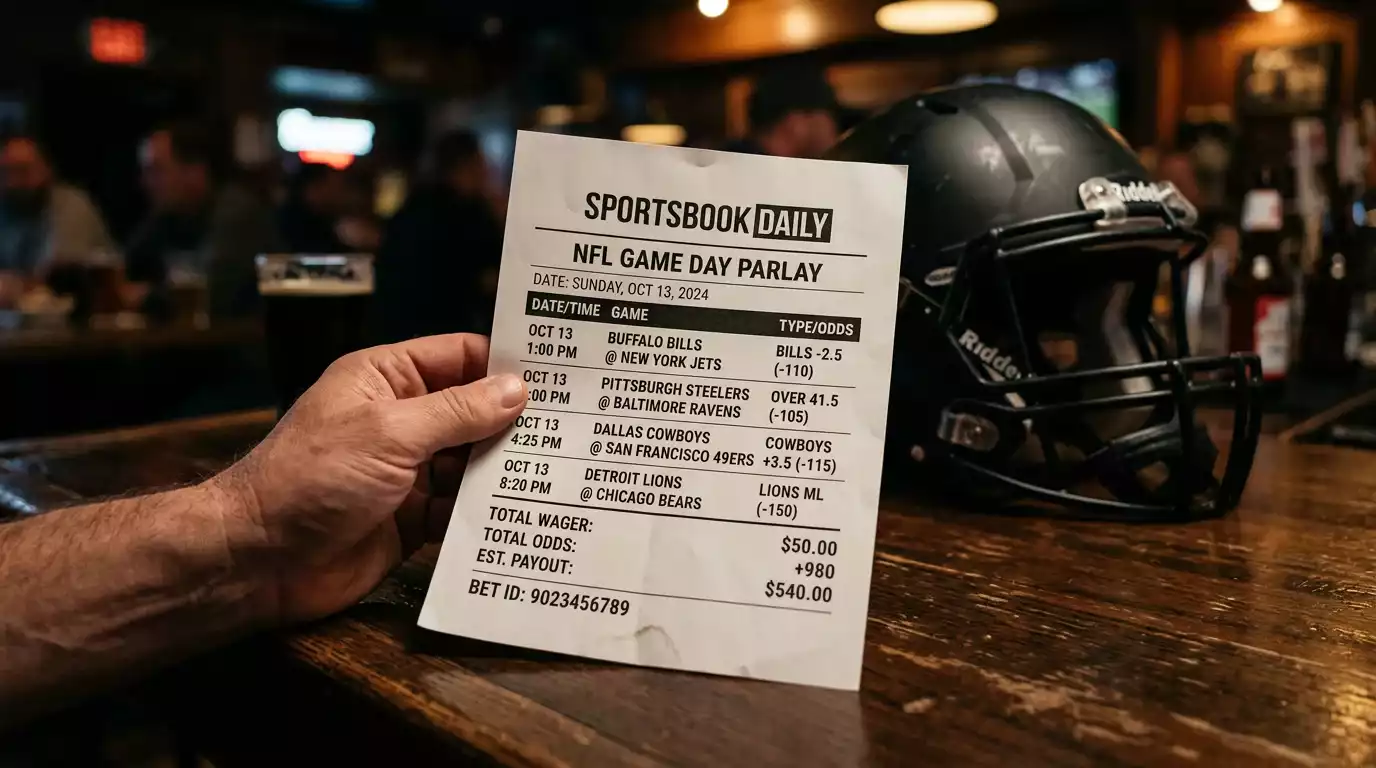
Where moneyline accas actually work is when you mix in one or two genuine underdog selections alongside shorter-priced picks. A two-leg acca with one -150 favourite (decimal 1.67) and one +200 underdog (decimal 3.00) returns 5.00 combined. You need that to hit 20% of the time to break even. If your underdog selection process is strong enough to identify 30-35% win-probability dogs at +200 prices, the expected value turns positive.
I’ve found the sweet spot for moneyline accas is two or three legs maximum. Beyond three, the combined probability erodes too quickly for the payout to compensate. And at least one leg should be a positive-expected-value underdog selection – that’s where the return actually lives. An acca built entirely from heavy favourites is just a slow way to lose money.
For UK bettors using bet builders or same-game parlays, moneyline selections serve a different purpose: they anchor the bet. Combining a moneyline favourite with player props in the same game creates a correlated structure where the favourite winning increases the probability of certain prop outcomes. That correlation isn’t fully priced in at every bookmaker, and it’s one of the few areas where accumulator strategy intersects meaningfully with moneyline analysis.
When the Moneyline Is the Wrong Choice
Not every game deserves a moneyline approach, and I’ve lost enough to know where the pitfalls sit. If your analysis says a team will win by 1-3 points but the moneyline is priced at -170, you’re paying too much for a margin that thin. The spread at +3 and -110 gives you a safety net for essentially the same read on the game. Conviction matters: take the moneyline when you expect a clear win, not when you expect to squeak by.
Moneyline favourites priced beyond -200 are almost never worth it as standalone bets. At -250, you’re risking 250 to win 100 – and in a league where roughly 30% of games are won by the underdog, that pricing rarely compensates for the risk. The NFL has more parity than any other major sport. Treating heavy favourites as certainties is the fastest way to drain a bankroll.
The other trap is emotional moneyline betting – backing your team to win outright because you believe in them, not because the price is right. I’ve done it. Everyone has. The discipline is in treating every moneyline as a probability question: does this team win often enough at this price to generate positive expected value over time? If the answer is no, the spread or a pass on the game entirely is the better move.
When is a moneyline bet better than a spread bet?
A moneyline bet is better when your analysis projects the team to win outright, not just cover. For underdogs, the moneyline pays significantly more than a spread bet if the team wins. For small favourites of three points or fewer, the moneyline offers a wider margin of victory for a modest price increase. Once the spread exceeds seven points, the moneyline on the favourite becomes too expensive relative to the risk.
How do heavy favourites’ moneyline odds translate to implied probability?
A moneyline of -200 implies a 66.7% win probability. At -300, the implied probability rises to 75%. At -450, it reaches 81.8%. In the NFL, where roughly 30% of games produce upsets, these implied probabilities often overstate the favourite’s true chances once the bookmaker margin is removed. Converting to decimal odds makes the calculation straightforward: divide 1 by the decimal odds to get the implied probability.
Are moneyline parlays a viable strategy?
Moneyline parlays can work with two or three legs if at least one selection is a positive-expected-value underdog. Parlays built entirely from heavy favourites offer poor risk-reward because the combined probability drops below the break-even threshold quickly. The sweet spot is mixing one shorter-priced selection with a carefully analysed underdog moneyline, keeping the total to three legs or fewer.
Written by the editors at nfl bet of the day.